

Hit enter to search or ESC to close



Supporting your Child’s Language Development at Home
Language is the foundation for learning, social connection, and confidence. From the moment babies coo and babble, they are laying the groundwork for conversations, reading, and storytelling later on. As a parent, you don’t need special tools or training to support your child’s communication. Everyday routines, playful interactions, and shared experiences create the richest opportunities for language development activities and growth.
This guide draws on expert advice and research to offer practical, parent-friendly strategies to nurture your child’s speech and language at home.
Everyday talking and listening
The simplest way to support your toddler’s speech development is by talking with them often. Narrating daily routines, “I’m pouring your juice. Oops, it splashed!”, helps children connect words to actions. Try the “serve and return” technique: when your child says or gestures something, respond warmly, then pause to let them reply. This back-and-forth teaches the rhythm of conversation and shows them that their voice matters.
Encourage longer conversations by repeating what your child says and expanding on it. If they say, “Car go,” you might reply, “Yes, the red car is going fast down the road.” Over time, these little expansions introduce new vocabulary and sentence structures.
Listening is just as important. Give your child time to finish their thoughts without jumping in, and ask open-ended questions like, “What do you think will happen next?” This helps them stretch their thinking and express ideas in more detail.
Reading and storytelling together
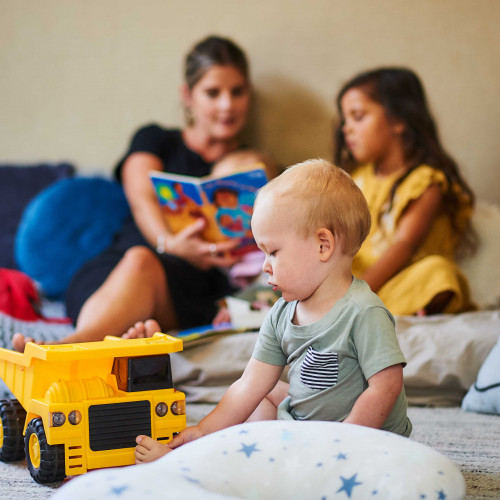
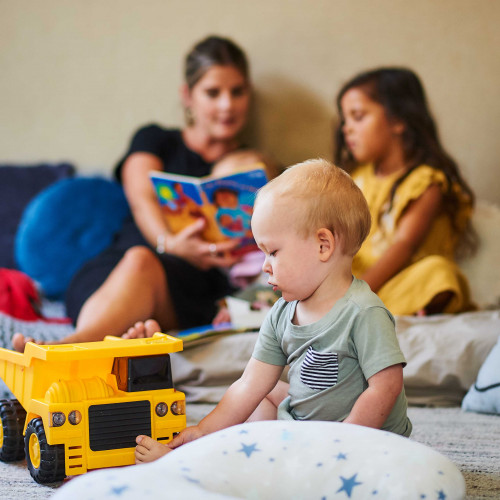
Reading aloud is one of the most powerful tools for language growth. Children love hearing stories again and again, which helps them predict what comes next and remember words almost by heart. Use expressive voices, point out pictures, and let your child turn pages or fill in missing words.
Books don’t need to be read word-for-word. You can pause to talk about the pictures, ask “What do you see?” or connect the story to your child’s life: “We went to the playground today, just like the boy in this book”.
Encourage your child to choose books and, when they’re ready, to retell stories in their own words. You can even create simple homemade books together, using drawings and captions. These playful storytelling moments build confidence, imagination, and narrative skills.
Play-based language learning
Play is a child’s natural way of learning. It’s also a perfect chance to develop new words and concepts. Games like “I spy,” rhyming songs, or sorting objects by sound (“which word starts with ‘sss’?”) help children become aware of how language works.
Pretend play is especially powerful. When children play vet, doctor, or shop, they experiment with new vocabulary and storytelling. For example, a child “buying a bus ticket” is practising sequencing (“first, then, next”) and social conversation.
Puppets, stuffed animals, building blocks, and puzzles also spark descriptive talk and problem-solving discussions. Instead of directing their play, sit alongside and comment on what they’re doing: “You’re building a tall tower with the red blocks. I wonder what you’ll add next?”
Everyday creativity and multisensory learning
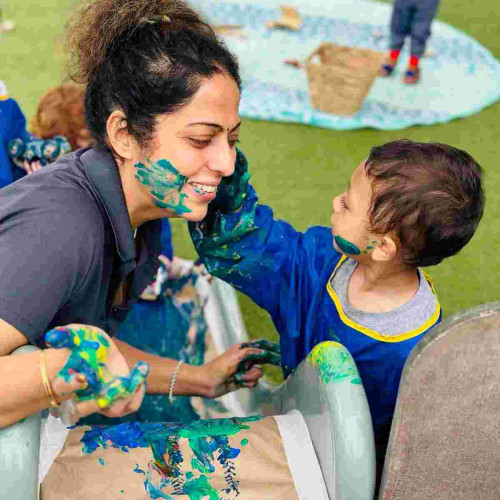
Creative activities like singing, drawing, and crafting provide endless opportunities to talk and learn new words. Singing nursery rhymes builds rhythm, rhyme, and repetition, which are key foundations for reading. Arts and crafts give children a chance to describe colours, shapes, and textures: “This paint feels smooth. You made a circle with blue paint.”
Even routine activities, such as cooking, cleaning, and gardening, can become language lessons. Talking through the steps introduces sequencing words like “first,” “next,” and “last” while also expanding vocabulary (“sweeping,” “mixing,” “pouring”).
Building listening and comprehension
Strong language skills aren’t just about speaking; they also depend on listening and understanding. Make eye contact when talking with your child, listen attentively, and model how good listeners behave.
Ask questions that go beyond yes/no answers: “Why do you think the fish swam away?” or “How did you feel when that happened?” These conversations encourage children to explain their reasoning, tell stories, and reflect on their experiences.
When your child makes mistakes “I holded the ball”, model the correct version without interrupting the flow of conversation: “Yes, you held the ball. Was it bouncy?” This keeps their confidence high while reinforcing correct grammar.
Creating a language-rich environment
Children thrive in homes where words are everywhere. Label household objects, display their name in writing, and keep books within easy reach. Age-appropriate audiobooks and interactive apps can also support learning, but screen time should be balanced with real-life talk.
Above all, remember that you are your child’s most important communication partner. Every giggle, every story, every shared question builds the foundation for literacy and lifelong learning.
Speech Development Starts at Home
Supporting language development at home doesn’t require special lessons or flashcards. It’s about slowing down, noticing the moments your child communicates, and turning those moments into opportunities for connection. By weaving conversation, storytelling, and play into everyday life, you’re not only helping your child learn to talk, you’re helping them find their voice.
Find your local Busy Bee Centre or get in touch to see how we can help give your child the best start to their learning journey.